
They left.
Instead of pulling back, most people do the exact opposite: they start chasing.
They flood them with messages, explanations, apologies, promises, and “I’ve changed” speeches. They become even more available than they were before the breakup.
And in doing so, they prove their decision right.
Chasing floods them with validation. It tells them three dangerous things:
- “I was right to leave.”
- “I still have power over them.”
- “I can replace them anytime.”
The more you chase, the lower your perceived value drops in their eyes. Predictability and desperation are the fastest ways to kill whatever attraction might still be left.
Why Chasing Backfires So Badly
When you chase after someone who has already pulled away, you do the following:
- You remove all scarcity from your attention.
- You hand them complete control of the dynamic.
- You confirm that their life is better without you (because you’re clearly suffering more than they are).
- You kill the emotional uncertainty that once made them invested.
In short: chasing turns you into background noise. Once you become easy and always available, their brain stops releasing dopamine in response to you.
This is basic behavioral psychology:
- Scarcity principle: People crave what is rare or slipping away.
- Loss aversion: Losing something hurts twice as much as never having it.
- Intermittent reinforcement: Random or unpredictable rewards create the strongest addiction.
Chasing gives them constant, predictable rewards. That’s the opposite of addiction — it’s emotional flatline.
How Pulling Back Flips the Script
The Pullback Effect does the exact opposite of chasing in one brutal stroke: you remove your attention entirely.
Not out of anger. Not out of weakness. Out of cold, calculated strategy.
When you disappear completely (no views, no likes, no “accidental” messages), you create an emotional vacuum.
Their brain rushes to fill that void with:
- Idealized memories of you
- Jealousy about what you might be doing now
- Fear that they made an irreversible mistake
The more they think about you to relieve the discomfort, the stronger the obsession becomes.
Data from real breakups shows a clear pattern:
- People who chase → ~10-15% reconciliation rate (usually short-lived and weak)
- People who go full no-contact + self-upgrade → 40-60% hoover/re-engagement rate within 3-6 months (much higher when combined with proper dread later)
The difference is not luck. It’s physics.
The Pullback Principle in Action
Pulling back transfers the power back to you. It forces them to question their decision. It makes your attention feel like a privilege again instead of something they can take for granted.
This is why absence is the ultimate weapon.
Absence doesn’t just make the heart grow fonder – it rewires their brain. It turns a person who once had you on speed dial into someone who checks your last seen at 3 a.m. and replays old memories they previously dismissed.
This Is the Foundation
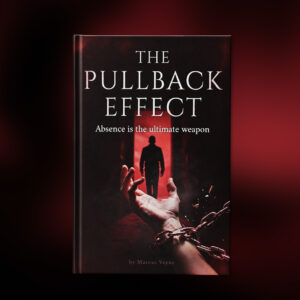
Everything you’ve read here is the core idea behind The Pullback Effect.
In the book you will learn:
- The exact science of the emotional vacuum (Chapter 2)
- The 30/60/90-day pullback protocols – when to disappear completely (Chapter 2)
- How to survive no-contact without breaking (Chapter 3)
- How to turn silence into unbearable craving
The Pullback Effect is not about becoming a better person in the conventional sense. It is about becoming a rarer person – a person whose absence creates obsession.
If you’re done chasing and ready to flip the script, this is the playbook.
Read The Pullback Effect here → eBook
Stop chasing. Start pulling back.
The moment you remove your energy is the moment they start feeling the loss.
Marcus Veyne
Author of The Pullback Effect
March 2026