
They didn’t leave because you weren’t “enough.”
They left because the emotional equation no longer balanced in their favor.
Most people spend months – or even years – trying to decode the surface-level reasons: “They said I was too nice.” “We grew apart.” “They need to find themselves.”
These are not explanations. These are socially acceptable excuses they give themselves (and you) to avoid admitting the real trigger.
The real trigger is almost always the same: loss of perceived high value + emotional predictability.
When someone initiates a breakup, their mind has already gone through a private, invisible calculation. That calculation looks something like this:
The 5 Phases That Lead to Their Leaving
- Initial Attraction Phase You were unpredictable, mysterious, slightly out of reach. Dopamine was high. They invested time, energy, and emotion because winning you felt rewarding.
- Comfort Phase You became reliable. Texts answered instantly. Plans confirmed in advance. Jealousy minimized. You thought this was “being a good partner.” Their brain experienced it as boredom. Dopamine stabilized – then dropped.
- Devaluation Phase Their brain started registering you as “secure but boring.” They began testing boundaries – late replies, less affection, more criticism. You responded with reassurance and over-explaining instead of calm withdrawal. Every test you “passed” by being nice actually eroded your value further.
- Pre-Breakup Justification They started rewriting history in their head. Small flaws became deal-breakers. Past good moments were reframed as “red flags in disguise.” This is called cognitive dissonance reduction – they convince themselves the relationship was always flawed so ending it feels righteous.
- Breakup Trigger One final event (real or completely manufactured) gives them the emotional permission slip: “This is the last straw.” But 90% of the time, the “straw” is just the excuse. The decision was made weeks earlier.
You cannot reverse a breakup by addressing the excuse they gave you. You reverse it by attacking the root: their perception that you are no longer a scarce, high-value option.
Why Predictability Kills Attraction
Once you become consistent and emotionally available on demand, they subconsciously register you as low value.
The pedestal collapses. Attraction evaporates. And no amount of flowers, long conversations, or “I’ve changed” speeches can rebuild it.
This is biology meeting psychology meeting power dynamics.
The person who leaves you does not miss your kindness. They miss the emotional uncertainty you once created without even trying.
The Pullback Effect – Recreating the Lost Tension
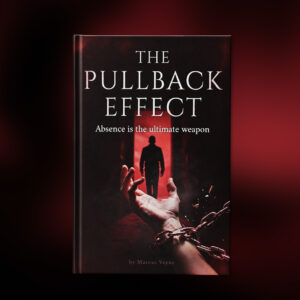
The Pullback Effect is the deliberate recreation of that lost tension – only this time, you control it completely.
It is not about becoming a “better person” in the conventional nice way. It is about becoming a rarer person. A person whose attention feels like a privilege. A person whose absence creates a vacuum they cannot ignore.
In the pages of The Pullback Effect, you will learn exactly how to engineer that vacuum:
- Why no-contact is not “healing time” – it is the most powerful weapon of psychological starvation when used correctly.
- How to re-enter their world not as someone begging, but as a high-value threat they suddenly fear losing again.
- How to weaponize jealousy, preselection, push-pull, and subtle dread without ever raising your voice.
This Is Only Chapter 1
Everything you’ve just read comes directly from Chapter 1: The Anatomy of Their Breakup – Mapping the Psychological Wound in my book The Pullback Effect.
But the book goes far beyond understanding why they left.
You will get the complete system:
- The science of the emotional vacuum (Chapter 2)
- Weaponized no-contact protocols — including the exact 30/60/90-day timelines (Chapter 3)
- How to re-engineer yourself into the ultimate prize (Chapter 4)
- Strategic re-engagement scripts that trigger instant regret (Chapter 5)
The Pullback Effect is not for the person who wants closure. It is for the person who wants control.
If you’re tired of wondering why they left and ready to make them regret it every single day they’re not with you – this is the playbook.
Read The Pullback Effect here → eBook
The game didn’t end when they walked away. It just changed rules.
Now you play by better ones.
Marcus Veyne
Author of The Pullback Effect
March 2026